
What Is SSI
SSI is a federal program for people with limited income and resources who are disabled, blind, or age 65 or older.
Unlike SSDI, SSI is not based mainly on your work history. That means you may still qualify even if you have never worked, worked very little, or do not have enough work credits for SSDI.
Who May Qualify
You may qualify for SSI if you are an adult with a disability and limited income and assets, if you are age 65 or older with limited means, or if you are low-income and applying for a child with serious physical or mental limitations.
The financial rules can be strict. Social Security may look at income, bank accounts, property, and support from other people or your living arrangement.
SSI for Adults
For adults, SSI usually comes down to two main issues: financial eligibility and disability. Social Security looks at whether you meet the income and resource rules and whether your condition keeps you from doing substantial work regularly.
We help people understand whether SSI may be an option when SSDI is not, and whether both programs may be in play at the same time.

SSI for Children
Children can qualify for SSI too, but the rules are different. Social Security looks at the child’s medical condition, how it affects daily functioning, and the family’s income and resources.
We help parents gather medical records, school records, therapy notes, and other information that shows how a child is functioning at home, at school, and in the community.
SSI and Disabled Adult Children
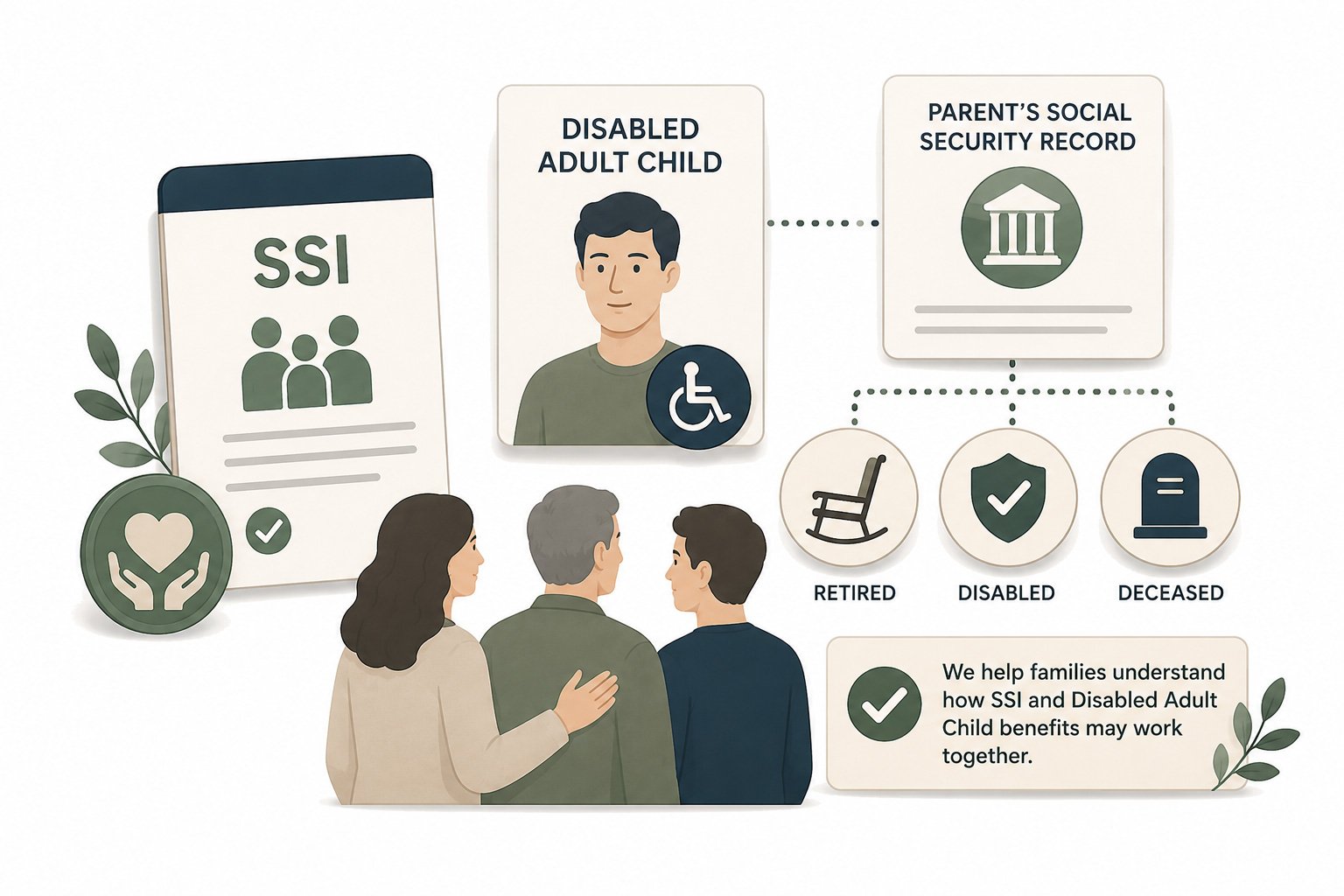
SSI can overlap with another type of benefit for disabled adult children whose disability began before age 22. In some situations, an adult child may qualify for benefits on a parent’s Social Security record if the parent is retired, disabled, or deceased.
This area can be confusing, especially when a person may be eligible for both SSI and Disabled Adult Child benefits. We help families understand how those options fit together.
How We Help With SSI Cases
SSI cases can be complicated because they involve both disability rules and financial rules. We help with applications, denials, hearings, and cases where more than one type of Social Security benefit may apply.
When you contact Spector & Lenz, you speak with a lawyer about your situation. We help explain the rules, review what evidence is needed, and guide you through the next step.
Payments and Other Support
SSI payments are modest, but they can help families and individuals stay more stable. The amount can depend on federal rules, state supplements, other income, and your living arrangement.
In many cases, SSI also opens the door to Medicaid and other forms of support.
Questions About SSI Benefits
SSI is a needs-based program for people with limited income and resources, while SSDI is based on a person’s work history and Social Security taxes. In some cases, where a monthly SSDI payment is low, you may also qualify for an SSI supplement.
Yes. SSI does not require a work history if you meet the medical, age, or blindness rules and the financial rules.
Yes. Your payment amount may change depending on where you live, whether you pay your share of food and housing costs, and whether you receive help from others.
Yes. Children with serious disabilities may qualify for SSI if they meet Social Security’s medical rules and the household meets the financial rules.
Sometimes, yes. A person whose disability began before age 22 may qualify for Disabled Adult Child benefits on a parent’s record, and in some situations, SSI may still matter too.
Disclaimer
This page is for general information about SSI and does not provide legal advice. Contacting us does not create an attorney-client relationship. We represent clients only after agreeing to take the case and completing the necessary paperwork. We cannot promise results, and we only continue appeals when there is a legal basis for further review.