
Back and Orthopedic Problems in Disability Claims
Serious back and joint problems can make sitting, standing, lifting, or even getting through a normal day much harder. If these limits keep you from working, we help show Social Security how your condition affects your ability to function on a regular work schedule
What This Can Feel Like
Back and orthopedic problems can affect nearly every part of daily life. You may wake up stiff, need extra time to get moving, struggle to sit or stand for long, or have pain that gets worse the more you do.
Some people can still push through certain tasks on better days, but they pay for it later with more pain, numbness, fatigue, or the need to lie down. That can make a normal work routine hard to maintain.

Common Conditions We See
These cases often involve conditions such as degenerative disc disease, degenerative joint disease, herniated discs, spinal stenosis, spinal arthritis, vertebral fractures, severe osteoarthritis, and ongoing problems after back or joint surgery.
These conditions can cause pain, weakness, numbness, reduced range of motion, and trouble walking, lifting, reaching, or using the arms and hands consistently.
How Social Security Looks at These Claims
Social Security does not approve claims based on pain alone. It looks for a medically determinable condition supported by medical evidence such as imaging, physical examination findings, treatment records, and specialist notes.
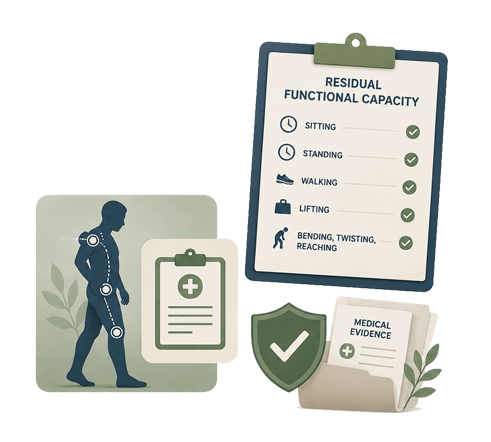
If a person does not meet one of Social Security’s strict musculoskeletal listings, the agency must still decide what work-related activities the person can do despite the condition. That includes things like sitting, standing, walking, lifting, carrying, reaching, and changing positions during a full workday.
Why Work Limits Matter
In many back and orthopedic cases, the key issue is not just the diagnosis. It is how the condition limits basic job activities over time.
We focus on practical questions such as how long you can sit, how long you can stand, how far you can walk, how much you can lift, and whether bending, twisting, or reaching triggers serious pain. Social Security refers to this kind of assessment as residual functional capacity.
The Medical Evidence That Helps
Strong claims often include imaging, exam findings, treatment notes, physical therapy records, surgical records, and medical opinions describing physical limits.
We understand that not everyone improves with treatment, and not everyone is a good candidate for surgery. Our goal is to connect the medical record to what your days really look like and why full-time work is no longer realistic.
Daily Life Still Counts
Social Security also looks at daily activities. That does not mean you have to be bedridden to qualify. It means the agency may compare your claim to how you manage chores, shopping, personal care, driving, childcare, or other routine tasks.
We help explain the full picture, including what help you need, how long tasks take, how often you rest, and what happens when you try to do too much.
How We Help
When you contact Spector & Lenz, you speak with a lawyer about your situation. We listen carefully, review the medical evidence, help clarify your functional limits, and prepare your case for the next step.
If your claim has been denied, we also help with appeals and hearings. Our job is to show that your condition is not just ordinary aches and pains, but a serious medical problem that affects your ability to work consistently.
When to Reach Out
You may want to talk with us if your back or joint condition has lasted, or is expected to last, at least a year, and you cannot sit, stand, walk, or lift enough to keep up with full-time work.
You may also want help if you tried to keep working, had to cut back, or were denied benefits.
Questions About Back and Orthopedic Disability Claims
Helpful evidence often includes MRIs, X-rays, CT scans, physical exam findings, treatment records, specialist notes, and medical opinions describing your limits.
No. Some people are not good candidates for surgery, and some still have serious limitations even after surgery. What matters is whether the medical evidence shows that your condition keeps you from working regularly. Social Security may also look at whether you followed your doctors’ recommendations or had good reasons for preferring a different treatment path.
Disclaimer
This page provides general information about back and orthopedic issues in Social Security disability claims. It does not provide legal or medical advice. Contacting us does not create an attorney-client relationship. We represent clients only after agreeing to take the case and completing the necessary paperwork. We cannot promise results, and we only move forward with appeals when there is legal merit for more review.