
How Social Security Looks At You: Sequential Evaluations
When the Social Security Administration evaluates your initial disability application, it uses a five-step, sequential process. The diagram above shows SSA’s approach.
The goal is the accuracy of disability determinations. If your application fails any step in this process, the review will stop, and the claim will be denied – and you may be in a position to appeal.

Step 1:
“SGA” stands for Substantial Gainful Activity.
Gainful work is work performed for pay or profit. In 2019, the SSA’s gross monthly earnings amount considered to be SGA are $1,220 per month. If you are working and earning $1,220 per month or more, your claim will be denied. You will pass this step if you are not working or are working but not at the SGA level.
Step 2:
SSA examines the severity and duration of your medically determinable impairments.
An impairment is severe if it significantly limits your mental or physical ability to do your chosen work activities. If your impairment is considered severe by SSA, then your application will move to the next step.

Step 3:
The SSA now examines the application against its published Listing of Impairments
(www. ssa. gov/ disability/ professionals/ bluebook/ Adult Listings. htm).
The listing is divided into 14 areas of the body. If the impairment meets the Listing criteria, you may be found disabled and begin receiving benefits. The body systems include:
- Muscle and skeletal system
- Senses and speech
- Breathing disorders
- Heart
- Digestion
- Urinary
- Blood
- Skin
- Glandular conditions
- Genetic disorders
- Brain/neurological disorders
- Mental disorders
- Cancer
- Immune system
However, if the evidence does not clearly meet the criteria of one of the conditions in SSA’s list, the analysis moves to Step 4.
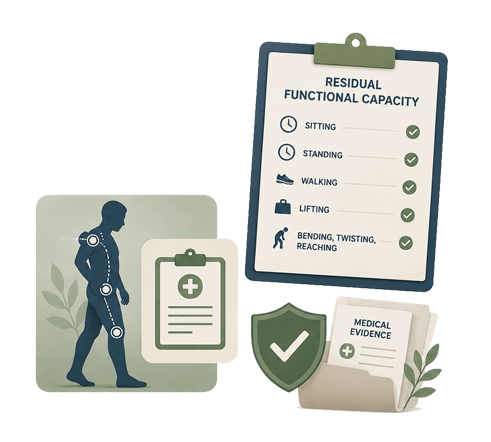
Step 4: Review Past Work
The first consideration here is what work you have done in the past, as well as your current functional abilities. If you can do the work you’ve done before, your application will be denied. If you cannot perform your past work, the analysis moves to Step 5.
Step 5: Assess Functional Abilities
At Step 5 SSA asks if you can do any other work, taking into account your remaining functional abilities. At this step in the process, SSA can rely on vocational experts and/or Department of Labor and other agency data on job availability.
Get Started Today
Step 3 is critical because a person can be approved right there if there is enough medical evidence and clear functional impairment. Steps 4 and 5 are more subjective and difficult to determine.
If you have questions about sequential evaluations or need legal guidance, contact Spector & Lenz today to schedule a consultation.
Disclaimer
The information you obtain at this site is not, nor is it intended to be, legal advice. You should consult an attorney for advice regarding your individual situation. We invite you to contact us and welcome your calls, letters and electronic mail. Contacting us does not create an attorney-client relationship. Please do not send any confidential information to us until such time as an attorney-client relationship has been established.