
Find These Two Things First
Before you read anything else, find the notice date and the appeal instructions. The notice date is usually near the top of the letter, and it is critical because the appeal deadline is generally 60 days, counted from 5 days after the notice date.
The letter should also explain how to appeal, including whether you can file online, by mail, or through a local Social Security office.
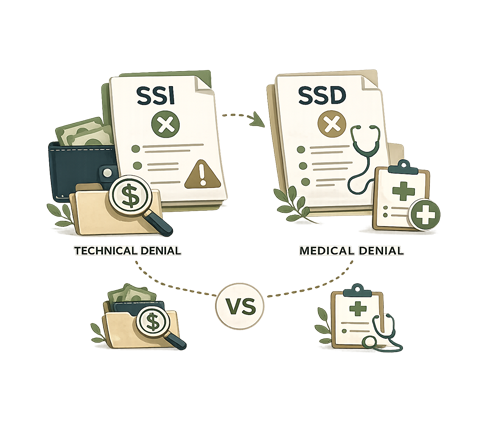
Was It a Technical or Medical Denial?
Many denial letters fall into one of two broad categories: technical or medical. A technical denial means Social Security found a non-medical problem first, such as work-credit issues, income, assets, or another eligibility problem.
A medical denial means Social Security reviewed the medical side of the case and decided the evidence did not prove disability under its rules. That can include findings that the condition was not severe enough, did not meet a listing, or does not prevent your past work or other jobs.
What Common Phrases Usually Mean
If the letter says your condition is “not severe,” Social Security is usually saying the records did not show enough proof that your symptoms significantly limit basic work activities.
If it says you do not meet or equal a listing, that means the agency did not think your records satisfied the strict criteria in the Listing of Impairments. If it says there was not enough medical evidence, the file may have been incomplete, outdated, or missing important treatment sources.

Look for the Clues in the Explanation
The denial letter may include a short explanation of the determination and often identifies at least some medical sources that Social Security says it reviewed. That list matters because missing providers can mean missing records.
This part of the letter may also summarize your work history or say Social Security thinks you can still do past work or other work. Even when the explanation feels generic, it can still point to what needs to be corrected on appeal.
Treat It Like a Checklist
A denial letter is easier to handle when you treat it as a checklist, not a judgment. If it says there is not enough evidence, the next question is what records, treatment notes, or doctor information may be missing. Or if nothing is missing, Social Security may have overlooked a key piece of evidence.
If the letter says you can still work, the next question is whether Social Security misunderstood your symptoms, job duties, treatment history, or daily limits. That is often where a stronger appeal begins.
How Spector & Lenz Helps
When you bring us a denial letter, we help identify the deadline, explain the type of denial, and look at what Social Security relied on. We also compare the language in the letter to your real medical history, symptoms, and work limitations so we can see what needs to be addressed next.
Our role is to turn “Social Security language” into something understandable and help you decide whether an appeal makes sense before the deadline passes.
What To Do Right Now
Keep the full letter, including every page, and make a note of the notice date right away. If you want to appeal, do not wait until the last minute, because missing the deadline can force you to start over or you may be unable to reapply.
It also helps to make a simple list of your doctors, clinics, and recent treatment, so missing evidence is easier to spot. A short review now can save a lot of lost time later.
Questions About Denial Letters
Usually 60 days. The denial letter should say how long you have to appeal. Social Security generally counts the deadline from 5 days after the notice date on the letter.
A technical denial is a non-medical denial based on issues like work credits, income, assets, or another eligibility requirement.
A medical denial means Social Security reviewed the medical evidence and decided it did not prove disability under its rules.
That may mean the file was incomplete, outdated, or missing records from important providers. It may also mean that Social Security overlooked some of the records in your file.
Yes. The later pages may contain the explanation, source list, and appeal instructions that matter most.
Disclaimer
This page provides general information about Social Security disability denial letters and appeals. It does not provide legal advice. Contacting us does not create an attorney-client relationship. We represent clients only after agreeing to take the case and completing the necessary paperwork. We cannot promise results, and we only move forward with applications or appeals when there is a legal basis for further review.