
What Depression Can Feel Like Day to Day
Depression can affect more than mood. It can leave you exhausted, unfocused, withdrawn, and unable to keep up with basic daily tasks.
You may struggle to get out of bed, shower, cook, answer the phone, or open the mail. You may forget appointments, abandon tasks halfway through, or avoid other people because interaction feels overwhelming.
Some days may be better than others. But when depression keeps interrupting your ability to function, despite medical treatment, it can make regular work impossible.
How Social Security Looks at Depression
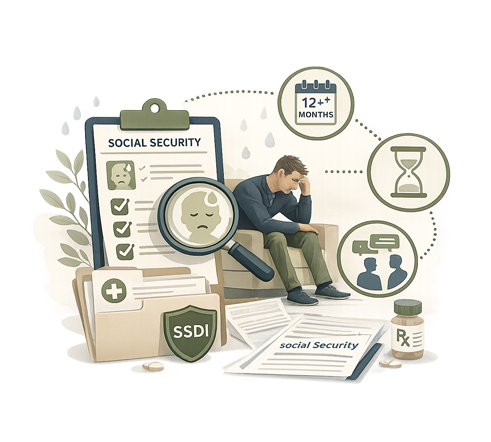
Social Security recognizes depression as a potentially disabling condition. But a diagnosis alone is not enough.
The agency looks at whether your symptoms have lasted, or are expected to last, at least 12 months and how they affect your ability to work on a regular, reliable basis. That includes your ability to concentrate, stay on task, keep pace, interact with others, and manage basic routines.
Why These Claims Can Be Difficult
Depression cases can be hard to prove because there is usually no scan or lab test that shows how severe your symptoms are. Many people also try to appear “fine” during short appointments or around strangers.
Medical notes may say you are “stable” or “doing better” compared to a prior visit, even if you still cannot handle a normal work schedule. Gaps in treatment can also be misunderstood, even though depression itself may make treatment harder to maintain.
Our job is to help Social Security see the full picture, not just isolated notes or brief snapshots.
The Role of Treatment and Records
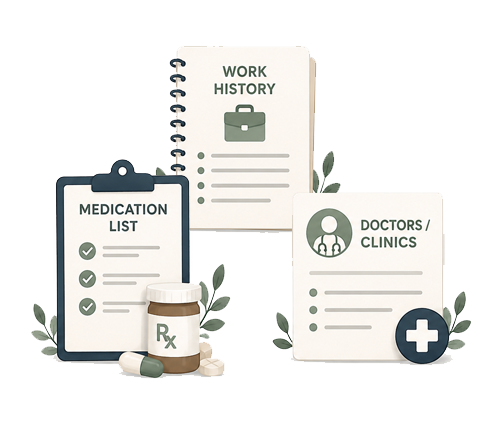
A strong claim usually includes a diagnosis and treatment history from qualified providers such as a psychiatrist, psychologist, therapist, or primary care doctor.
Helpful records may include medication management, counseling, therapy notes, hospitalizations, intensive outpatient treatment, or other mental health care. What matters most is showing how symptoms have affected you over time, even if treatment has not fully resolved them, and that you consistently engage in treatment.
Connecting Depression to Work Limits
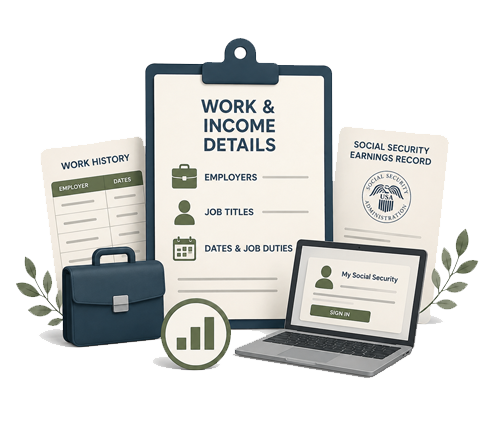
For Social Security, the key issue is how depression affects your ability to function in a job on a sustained basis.
We look at questions like whether you can stay focused long enough to finish simple tasks, follow instructions, handle stress, interact with supervisors or co-workers, and show up consistently. We also look at how often bad days would interfere with attendance, pace, and reliability.
Then we help connect those limits to the rules Social Security is supposed to apply.
How Spector & Lenz Helps
In depression cases, we listen closely to what daily life is really like for you. We review medical and therapy records, help explain gaps or confusing notes, and work with you to describe your limits in clear, honest language.
If your case goes to a hearing, we prepare you for the questions you may face and stand with you through the process. When depression overlaps with anxiety, pain, trauma, or other conditions, we present the whole picture rather than treating each condition separately.
Our goal is to help the decision-maker see you as a person, not just a diagnosis.
When to Reach Out
You may want to talk with us if depression makes it hard to get out of bed, handle basic tasks, be around people, or keep a regular job. You may also want help if you tried to work, had to stop, or already applied and were denied.
You do not have to make every decision today. A short conversation can help you understand whether disability benefits may be realistic in your situation and what the next step may look like.
Disclaimer
This page provides general information about depression in Social Security disability claims. It does not provide legal or medical advice. Contacting us through this site does not create an attorney-client relationship. We represent you only after we agree to take your case and you sign our retainer agreement and any required government forms. We cannot promise specific results, and we only move forward with appeals when we believe there is legal merit for more review.