
Autism and Developmental Disorders in Disability Claims
Autism and other developmental disorders affect more than test scores. They shape communication, behavior, sensory regulation, and daily life at home, at school, and at work. We help families and adults show Social Security how those limits affect real-world functioning.
How These Conditions Can Affect Daily Life
Autism and developmental disorders can look different from one person to another. Common struggles may involve communication, social interaction, rigid routines, sensory overload, and executive functioning problems such as starting tasks, switching tasks, and managing time.
For younger children, those challenges may show up as meltdowns, wandering, school difficulties, or needing more support than other children of the same age. For teens and adults, they may show up as repeated job loss, shutdowns in busy settings, or needing structure and supervision that a typical workplace does not provide.
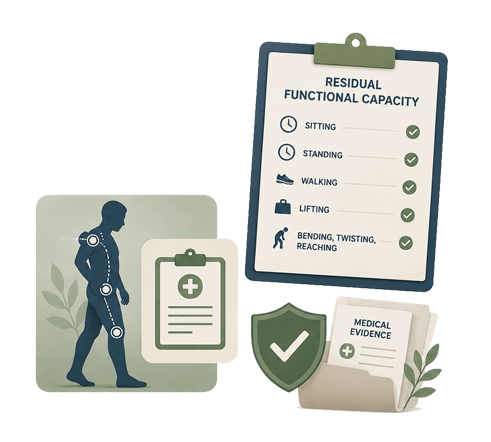
Children With Autism
For children, Social Security looks at how the condition affects functioning compared with other children of the same age. It evaluates functioning across childhood domains, including learning, attention, social interaction, self-care, and overall health and well-being.
That is one reason school evidence matters so much. Social Security can use school records and information from teachers and other educational staff to evaluate how a school-age child is functioning.
Adults and Disabled Adult Children
For adults, the question is usually whether autism or another developmental disorder prevents full-time work on a regular and reliable basis. Social Security looks at areas such as understanding information, interacting with others, maintaining pace, and adapting or managing oneself.
For disabled adult children, there may also be a separate benefit path tied to a parent’s Social Security record if the disability began before age 22.
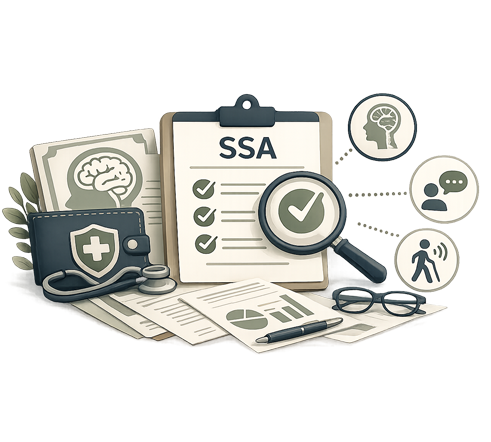
How Social Security Evaluates These Claims
Social Security evaluates limitations caused by autism spectrum disorder in both adults and children. But a diagnosis is not enough. The agency also wants to know how the condition affects communication, social functioning, learning, concentration, adaptation, and daily living.
For children, the case may turn on how much the condition limits their functioning in the areas that Social Security’s rules address. For adults, the question is usually whether the condition prevents sustained competitive work, even in simple or entry-level jobs.
What Evidence Helps Most
Helpful evidence often includes diagnostic testing, developmental evaluations, therapy records, psychiatric or neurological records, school files, IEPs, 504 plans, teacher reports, and notes about safety concerns, meltdowns, or sensory problems.
For adults, useful evidence may also include vocational records, supported-employment records, job-coach notes, or work-history details showing repeated problems with supervision, interaction, transitions, or pace.
How We Connect Daily Life to the Rules
In these cases, the challenge is often translating everyday struggles into the framework Social Security uses. We look at how the person handles changes in routine, multi-step instructions, sensory input, safety, supervision, and work-like demands.
Then we help describe those realities in terms of functioning. The goal is to show not just that a diagnosis exists, but what level of support is actually needed in day-to-day life.
How Spector & Lenz Helps
We listen carefully to parents, caregivers, and adults themselves about what daily life really looks like. We review records, highlight the most useful evidence, explain the medical and financial rules that may apply, and help prepare for the next step in the claim or appeal process.
This may include SSI for a child, SSI for an adult, or disabled adult child benefits linked to a parent’s record when the facts support that path.
When to Reach Out
You may want to contact us if your child needs much more support than peers, if an older teen or adult cannot keep a job or function independently, or if you are trying to understand disability benefits for a disabled adult child whose condition began before age 22.
You do not need every document in hand before you call. We can help you figure out what you have, what is missing, and what Social Security is most likely to care about.
FAQs About Autism and Developmental Disability Claims
No. Social Security also looks at how the condition affects real-world functioning, including communication, social interaction, concentration, adaptation, and daily living.
School records, IEPs, teacher questionnaires, and information from educational staff are often very important because they show how the child functions in daily settings.
Yes. Adults may qualify if the condition prevents sustained full-time work under Social Security’s rules.
It is a type of Social Security benefit that may be available to an adult whose disability began before age 22 and who qualifies on a parent’s Social Security record.
Disclaimer
This page provides general information about autism and developmental disorders in Social Security disability claims. It does not provide legal, medical, or educational advice. Contacting us does not create an attorney-client relationship. We represent clients only after agreeing to take the case and completing the necessary paperwork. We cannot promise results, and we only move forward with applications or appeals when there is a legal basis for further review.