
Social Security Disability Insurance (SSDI) Benefits
If you have limited income and serious health problems—or you are low-income and caring for a child with disabilities—SSI may help with basic living costs. We explain your options in plain English and help you understand what steps make sense next.
What Is SSDI
Social Security Disability Insurance (SSDI) is a federal program for workers who paid Social Security taxes and later became unable to work due to medical problems. It’s insurance you already paid for through your wages, so it is not a handout — it is a benefit you earned.
To qualify, you generally need to meet two basic tests:
- A health condition, or combination of conditions, that keeps you from doing substantial work on a regular, ongoing basis
- Enough recent work history in jobs where you paid Social Security taxes
Unlike SSI, SSDI isn’t based on financial need. Instead, it looks at your work history and medical limits together to determine eligibility.
Work Credits and Timing
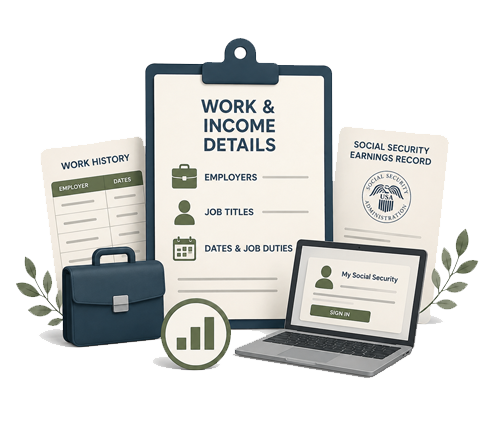
When your paycheck deducts Social Security taxes, you earn “credits” toward SSDI coverage. You don’t need a lifetime of work, but you do need a certain number of credits based on your age when you became disabled.
There is also a timing rule. You generally need to have worked recently enough before you became unable to continue working. For many people, this means working during at least part of the years right before they had to stop.
If you tried to return to work but couldn’t keep going because of your health, that pattern can still matter to your case. There are rules that recognize short, unsuccessful attempts to work. We’ll walk you through how these rules may apply to your situation and help you describe your work history clearly and honestly.
Medical Requirements
A diagnosis alone isn’t enough for SSDI. Social Security also looks at the nature of your conditions, how long they have lasted or are expected to last, and how consistently you have sought treatment.
We help you gather records from your doctors, hospitals, clinics, and therapists, paying close attention to specialist notes, test results, and opinions about your work limits. We also help you think through how your symptoms affect daily tasks — not just whether you can do something once, but whether you can sustain it over a full workday, week after week, without extra breaks.
What SSDI Benefits Can Provide
If you qualify, SSDI benefits can include:
- Monthly Cash Benefits based on your past covered earnings
- Back Benefits, which may cover time between when you became disabled and when you were approved
- Medicare Eligibility, opening the door to coverage after a waiting period — often critical for people who need ongoing treatment and medication
For many clients, these benefits mean real stability. They can help cover rent or a mortgage, everyday bills, and health care costs, while also restoring a sense of dignity after a long stretch of uncertainty.
How We Help With SSDI Claims and Appeals
We’re by your side at every stage of the process:
- Before Filing: We review your work and medical history to see whether SSDI is a realistic path, and help you decide when and how to apply.
- Initial Application: We help you navigate Social Security’s online and sometimes in-person processes. We help you complete the forms and detail your symptoms, limits, and work history in a way that matches your lived experience.
- After a Denial: If Social Security denies your claim, we study the reasoning behind the decision and build a realistic strategy for appealing to the next stage.
- Hearings and Beyond: We prepare you for hearings, question experts when needed, and raise legal arguments. When the law supports it, we pursue Appeals Council review or federal court relief.
Throughout the process, your case is guided by lawyers who understand the specific stage you’re in. Social Security’s processes can be slow and difficult to follow, but we do not want to leave you guessing about what could happen next.

Fees for SSDI Cases
In most SSDI cases, we’re only paid if we succeed in getting your claim approved. Our fee is usually a percentage of your past‑due benefits, capped under Social Security rules, explained in writing and signed by you and by us, and the agency must approve the fee before we’re paid.
This means you can seek help without adding new financial stress. You don’t pay us upfront to handle your SSDI claim.

Payments and Other Support
SSI payments are modest, but they can help families and individuals stay more stable. The amount can depend on federal rules, state supplements, other income, and your living arrangement.
In many cases, SSI also opens the door to Medicaid and other forms of support.
When to Talk With a Lawyer
It’s never “too early” to talk with a disability lawyer about SSDI – even if you’re still working and planning ahead. Getting advice early can help you avoid mistakes that are more difficult to fix later. If you have stopped working, tried and struggled to keep working, or applied and were denied without understanding why, now is a good time to reach out.
A short, no-pressure conversation can help you understand whether SSDI is realistic for your situation and what your next step should be.
Disclaimer
The information you obtain at this site is not, nor is it intended to be, legal advice. You should consult an attorney for advice regarding your individual situation. We invite you to contact us and welcome your calls, letters and electronic mail. Contacting us does not create an attorney-client relationship. Please do not send any confidential information to us until such time as an attorney-client relationship has been established.