
What Daily Life Can Feel Like
Living with chronic pain or fibromyalgia can mean waking up exhausted, changing positions constantly, planning your day around pain and fatigue, and never knowing when a flare-up will take over. For many people, “fibro fog” adds another layer of difficulty by affecting memory, concentration, and word-finding.
That up-and-down pattern is part of what makes these conditions so hard to explain. Some days may look manageable from the outside, while others make even basic tasks feel impossible.
How Social Security Looks at These Claims
Social Security does not grant benefits for pain by itself. It first looks for a medically determinable impairment that could reasonably cause your symptoms.
For fibromyalgia, Social Security follows SSR 12-2p, which recognizes fibromyalgia as a possible medically determinable impairment when certain criteria are met. That guidance looks at widespread pain, the exclusion of other conditions, and either tender-point findings or repeated symptoms such as fatigue or cognitive problems.
Why These Cases Are Often Misunderstood
These cases can be difficult because there is often no single test result that captures how disabling the condition is. Fibromyalgia and chronic pain may involve symptoms that fluctuate, and records can understate how much effort it takes to get through daily life.
Decision-makers may focus on isolated better days or on the fact that you still try to do some chores, appointments, or family tasks. Our job is to help show the full pattern over time, including what those efforts cost you physically and mentally.

What Evidence Helps
Helpful evidence often includes records from primary care doctors, rheumatologists, pain specialists, neurologists, therapists, or other providers who have documented your pain, fatigue, sleep problems, and cognitive issues over time.
Treatment history matters too. Social Security often wants to see what you have tried, such as medications, therapy, injections, physical therapy, or other care, and how effective those efforts were.
How Pain Becomes a Work-Limit Case
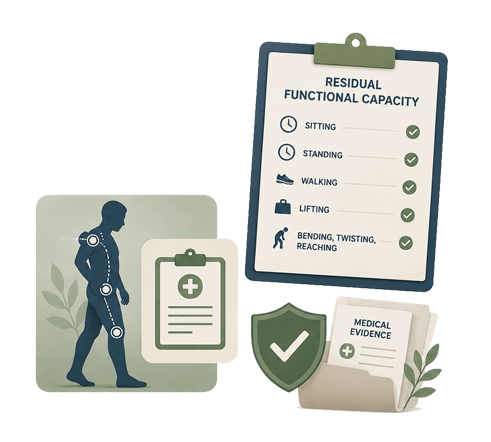
In the end, Social Security looks at function. It asks what you can still do despite your impairments, including sitting, standing, walking, lifting, concentrating, persisting, and maintaining pace over a normal work schedule.
That is where residual functional capacity, or RFC, becomes important. RFC is the agency’s assessment of the most you can do in a work setting despite your medically determinable impairments and related symptoms.

How Spector & Lenz Helps
Evidence about pain, fatigue, daily activities, treatment, and functional limitations is crucial in disability cases. In chronic pain and fibromyalgia claims, that means helping gather records, identifying patterns in the treatment notes, and connecting those records to real-world limits.
We also ask clients to describe any good days, bad days, flare-ups, missed activities, and the after-effects of pushing through pain. That kind of detail can matter when Social Security decides whether someone could sustain full-time work.
When to Reach Out
You may want to talk with us if you have long-term widespread or severe pain, tried treatment without enough relief, cannot sustain full-time work, or were denied even though the decision does not reflect what your day-to-day life is really like.
A conversation can help you understand whether an application or appeal makes sense and what evidence may matter most next.
Questions About Chronic Pain and Fibromyalgia Claims
Pain alone is not enough, but chronic pain can support a disability claim when it stems from a medically determinable impairment and causes serious work-related limits.
Symptoms such as widespread pain, fatigue, unrefreshing sleep, and cognitive problems can all matter, especially when they are documented consistently over time.
Helpful evidence may include treatment notes, specialist records, medication history, imaging or lab work used to rule out other conditions, and provider opinions about functional limits.
Residual functional capacity, or RFC, is Social Security’s assessment of the most you can still do in a work setting despite your impairments and symptoms.
Disclaimer
This page provides general information about chronic pain and fibromyalgia in Social Security disability claims. It does not provide legal or medical advice. Contacting us does not create an attorney-client relationship. We represent clients only after agreeing to take the case and completing the necessary paperwork. We cannot promise results, and we only move forward with applications or appeals when there is a legal basis for further review.