
The Appeals Process, Explained Simply
Most disability appeals move through a few main stages: reconsideration, a hearing before an Administrative Law Judge, Appeals Council review, and sometimes federal court.
We can help track the rules, protect deadlines, and explain what comes next in plain language.
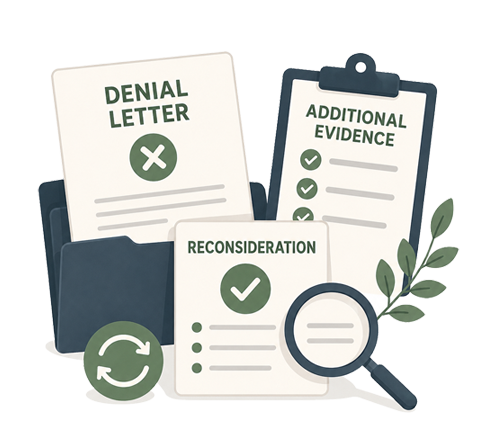
Reconsideration: The First Appeal
After a denial, the first step is usually reconsideration. This is a second review by Social Security, and it gives you a chance to add records, fix mistakes, and clarify how your condition affects your ability to work.
We help file the appeal, submit updated evidence, and keep the case moving. Even when reconsideration ends in another denial, it is often the step that leads to a hearing.

The Hearing Is Often the Most Important Stage
At a hearing, a judge takes a fresh look at your case. This is your chance to explain what you are dealing with and how your condition affects daily life and work.
We prepare you for the judge’s questions, update the record, and attend the hearing with you. A lawyer from Spector & Lenz stands beside you, presents your case, and addresses expert testimony or legal issues that come up.
Appeals Council Review
If a judge denies your claim, the next step may be Appeals Council review. The Appeals Council usually does not hold a new hearing; it reviews the judge’s decision to see whether legal or procedural errors affected the outcome.
This stage is more technical, so we review the decision and record closely to prepare a written argument. While many cases are denied by the Appeals Council, you usually must file an appeal at this stage before you can go to federal court. .

Federal Court, When Appropriate
If the Appeals Council denies review or issues an unfavorable decision, some cases may be taken to federal court. This is not a new application—it is a legal challenge to Social Security’s decision.
Many firms stop before this stage. Spector & Lenz handles federal court cases when there is a sound legal basis to move forward, and we also review court cases even if we did not handle the earlier stages.
How We Handle Appeals
Appeals are not all the same. What works at reconsideration is different from what works at a hearing or in federal court.
That is why our team approach matches the stage of the case. You still work with one firm, but lawyers handling your appeal are focused on the work required at each level.
Disclaimer
This page provides general information about Social Security appeals and hearings. It is not legal advice. Contacting us does not create an attorney-client relationship. We represent clients only after agreeing to take the case and completing the necessary paperwork. We cannot promise results, and we pursue appeals only when we believe there is a legal basis to do so.