
Reality of Neurological Disorders
Living with a neurological condition can change nearly every part of daily life—from working and driving to caring for your family and simply getting through the day. When your symptoms make it hard or impossible to work, Social Security Disability Insurance (SSDI) may provide a vital financial lifeline, but the rules can feel confusing and overwhelming.
Our woman-owned disability law firm has spent decades helping people with serious brain, spinal cord, and nerve disorders pursue SSDI and SSI benefits, and we are here to guide you through your options with care and clarity.
What Are Neurological Disorders?
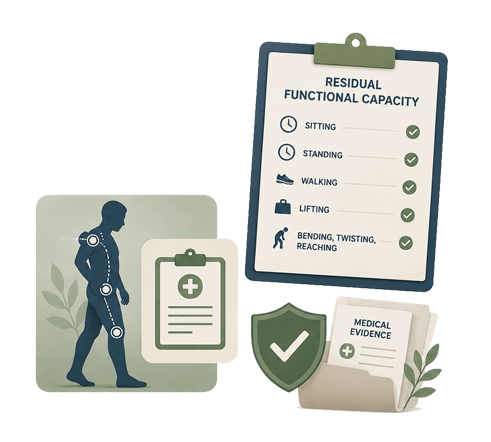
Neurological disorders affect the brain, spinal cord, or nerves and can change how you move, feel, think, speak, or see. For SSDI, Social Security looks at how those changes limit your ability to work, not just the name of your diagnosis.
In our practice, we often see challenges with walking and balance, using your hands, memory and concentration, speech or vision, chronic pain, and severe fatigue. Even if your symptoms come and go, they can still be disabling if they keep you from reliable full-time work.
Common Neurological Conditions in SSDI Claims
Below are examples of neurological conditions that often appear in SSDI and SSI claims. This is not an exhaustive list—many other brain and nerve disorders may also qualify if they are severe and long-lasting.
- Epilepsy and seizure disorders
- Stroke and post-stroke complications (weakness, speech, or balance problems)
- Benign and malignant brain tumors
- Parkinson’s disease and other movement disorders
- Multiple sclerosis (MS)
- Amyotrophic lateral sclerosis (ALS)
- Cerebral palsy (in adults and children)
- Spinal cord or nerve root disorders, including spinal injuries
- Muscular dystrophy and other progressive muscle diseases
- Myasthenia gravis
- Peripheral neuropathy, including some diabetes-related nerve damage
- Traumatic brain injury (TBI)
- Neurodegenerative and dementia-related disorders, including early-onset Alzheimer’s disease
If your diagnosis isn’t listed but your symptoms prevent you from working consistently, our attorneys can review your medical records and work history to see whether an SSDI or SSI claim may be possible.
How SSA Looks at Neurological Disorders
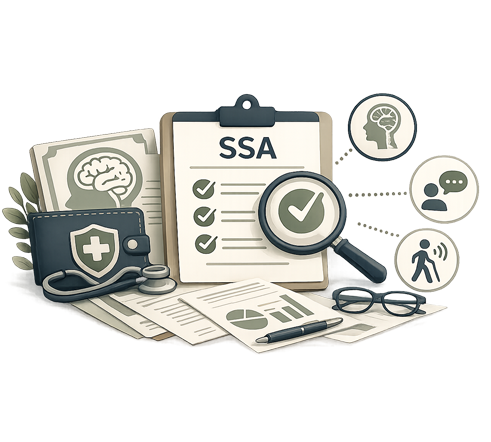
SSA uses medical rules—sometimes called “listings”—to evaluate many neurological disorders and focuses on how your condition affects movement, coordination, speech, vision, memory, and your ability to follow instructions or stay on task.
Even if you do not meet every detail of a specific listing, you may still qualify based on your overall limitations, age, education, and past work. Our firm helps connect the medical details with the real-world impact on your job so that SSA can see the full picture of how your condition affects your daily life.
How Our Firm Helps People With Neurological Disorders
Neurological disability claims can be complex, especially when symptoms change over time or are hard to measure. Our experienced legal team concentrates in Social Security disability law and helps by:
- Reviewing your medical records and test results against SSA’s disability rules.
- Helping you clearly describe your day-to-day limitations in practical, plain language.
- Guiding you through applications, reconsiderations, hearings, Appeals Council review, and, when needed, federal court appeals.
You can start with a free initial consultation, and in most disability matters the attorney’s fee is set by law and is only paid if you win benefits, subject to SSA approval. If we are not successful in securing benefits, we do not receive attorneys’ fees; in that situation, your only cost is typically for obtaining medical records.
Ready to Talk About Your Neurological SSDI Claim?
If you or a loved one is living with a neurological disorder and struggling to work or stay financially afloat, you do not have to face the SSDI system alone. Our firm is personable, attentive, and focused entirely on Social Security disability law, and we are ready to sit down and talk with you about your case.
Call us today or take our free SSDI qualification quiz. A short conversation can help you understand whether your condition may qualify and what you can do next to protect your financial future.
Common FAQs About Neurological Disorders and SSDI
No. A diagnosis alone doesn’t guarantee SSDI. SSA focuses on how your symptoms limit your ability to work for at least 12 months. Our attorneys help you clearly show how your condition affects everyday tasks and full-time work.
Records from neurologists or other specialists, imaging or tests (like MRIs, EEGs, EMGs), and treatment notes that describe your ongoing symptoms and limits are key. We work with you to gather and organize the most helpful records.
Yes. If seizures, sudden weakness, confusion, or other episodes make you unreliable for steady work, you may still qualify. We help you explain how the good days and bad days together make full-time employment unrealistic.
Often, yes. Many neurological claims are approved later, after more evidence or a hearing with a judge. Our firm regularly handles appeals and, when appropriate, federal court cases. We can review your denial and advise whether an appeal makes sense.
You can call for a free consultation to talk through your diagnosis, symptoms, work history, and any prior denials. You can also start with our quick online SSDI qualification quiz and then decide whether to speak directly with one of our attorneys.
Disclaimer
This page provides general information about autism and developmental disorders in Social Security disability claims. It does not provide legal, medical, or educational advice. Contacting us does not create an attorney-client relationship. We represent clients only after agreeing to take the case and completing the necessary paperwork. We cannot promise results, and we only move forward with applications or appeals when there is a legal basis for further review.